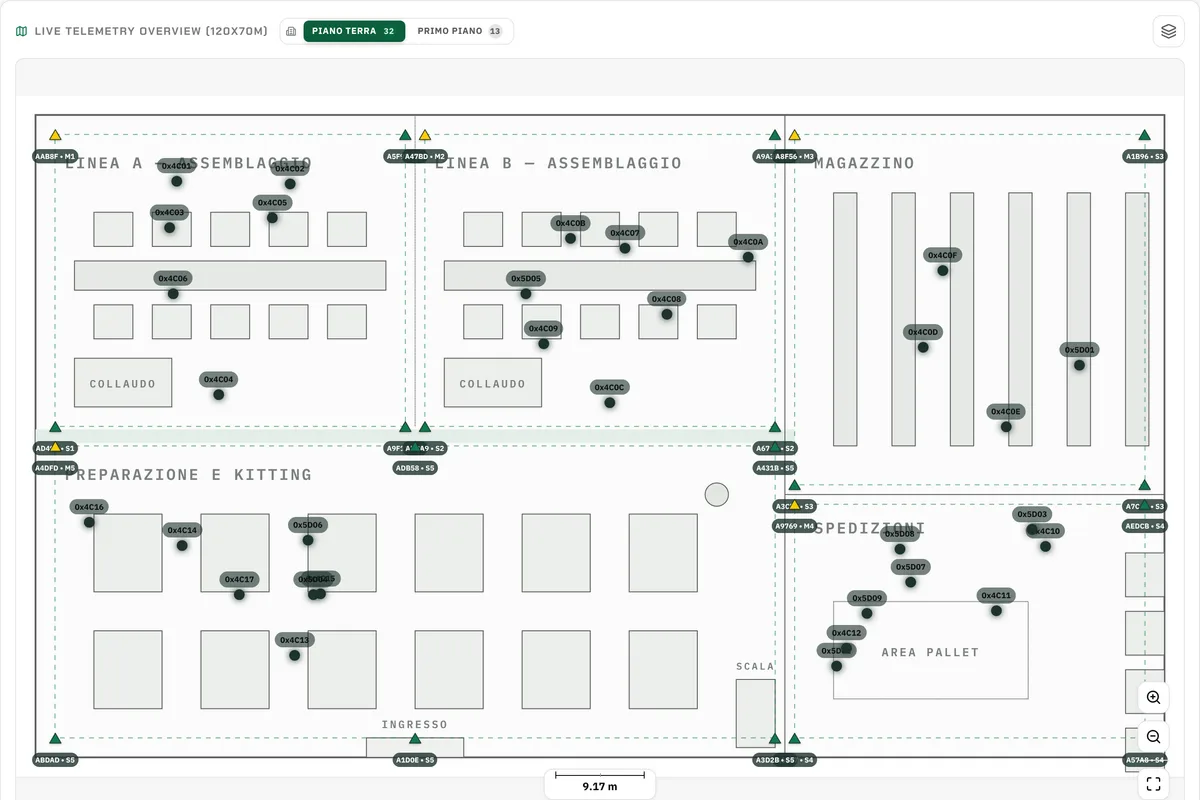
 SCREEN
SeeAvailable
Live map
Every tag on your plan, now.
People and assets on the plan of your plant, in real time, cell by cell. Open it in the control room or from any browser on your network.
All sectors
Apps
Loki is an infrastructure, like a network: tags on people and assets, anchors on the walls, one engine on your server. An app is a software and configuration package that uses it for one job. The hardware stays the same; you switch the app on when you need it.
App store
Filter by what the app does or by your sector. Available apps come with every cell; the others are switched on when they are ready.
SCREENEvery tag on your plan, now.
People and assets on the plan of your plant, in real time, cell by cell. Open it in the control room or from any browser on your network.
All sectors
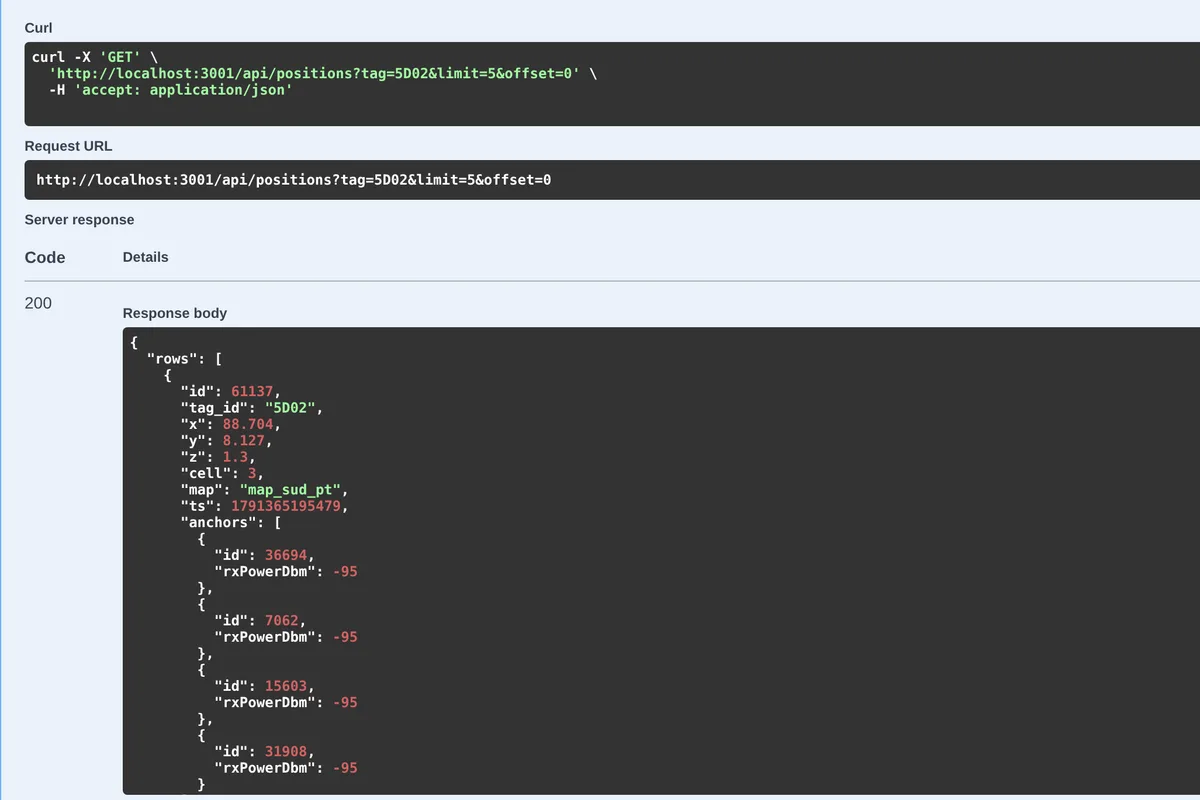 SCREEN
Where everything was.
Positions stay on your server, with the history behind each tag: where a pallet was yesterday, which route a cart took.
All sectors
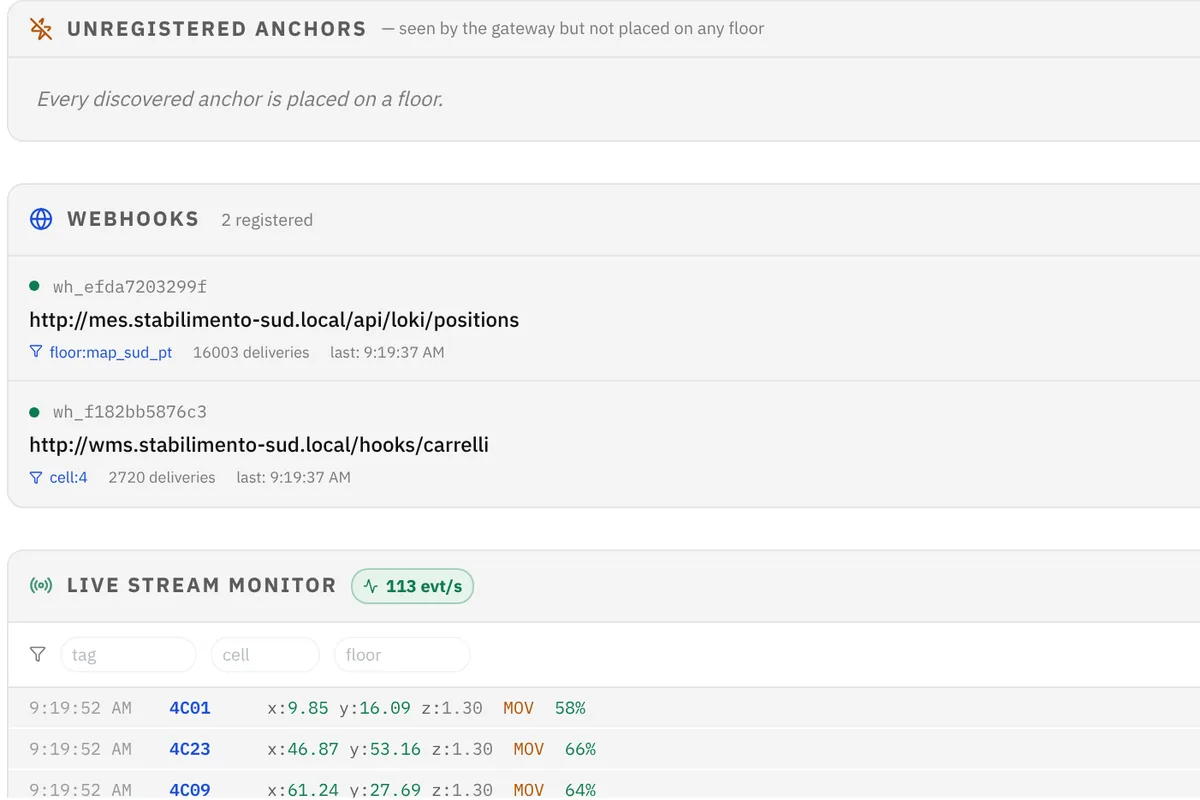 SCREEN
Positions in your systems.
Live positions and events reach your WMS, ERP or SCADA through the API, a WebSocket stream and webhooks. No connector to buy.
All sectors
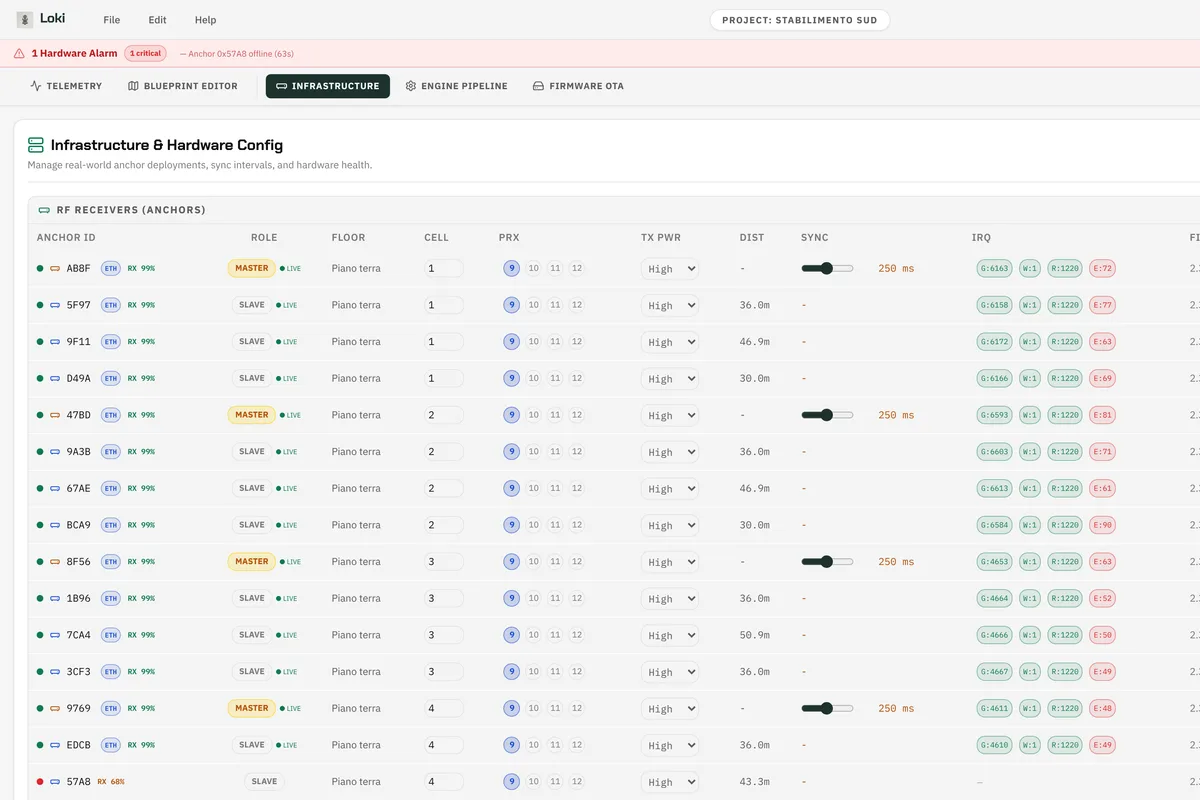 SCREEN
Know when something stops.
Anchors and tags on one page: online or not, firmware version, an alarm when an anchor goes silent. Firmware updates to all the anchors from the same screen.
All sectors
 CONCEPT
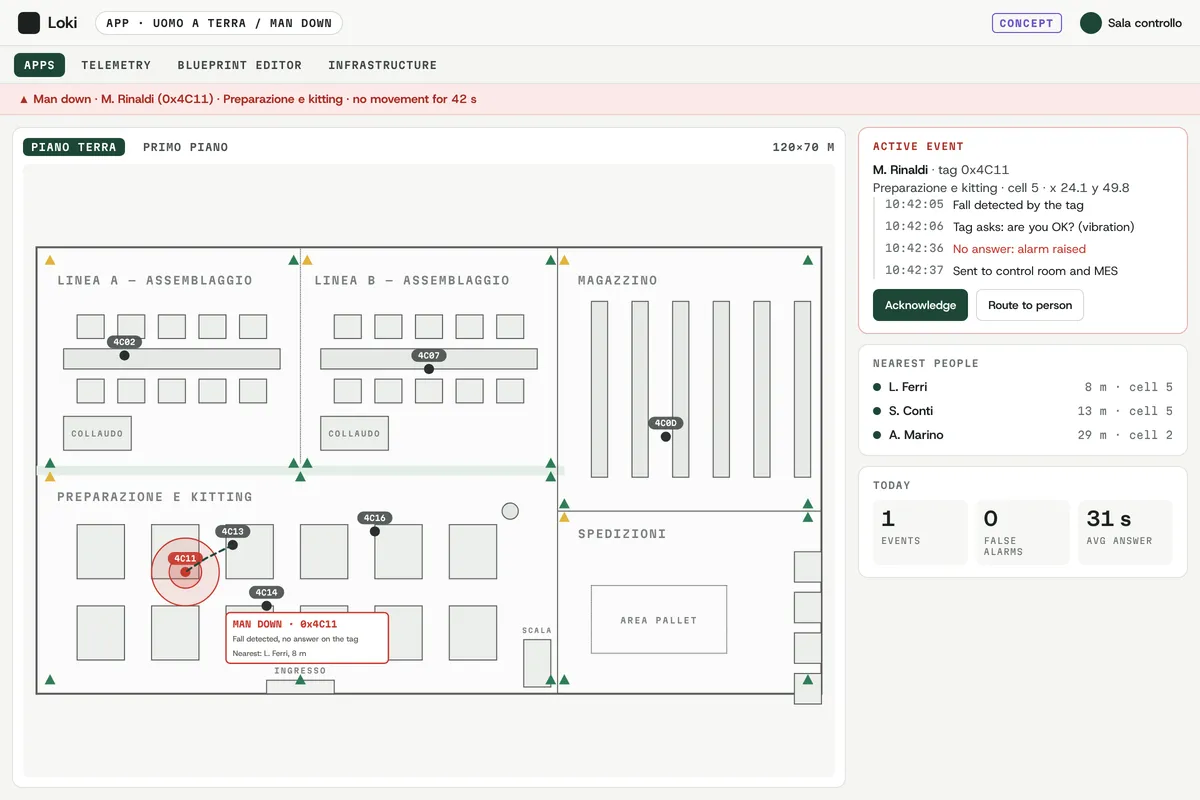
A fall, or no movement: an alarm with the position.
The tag detects a fall, or a worker who has not moved; it asks the wearer first, then raises the alarm with who and where.
Manufacturing · Logistics and warehouses · Chemicals and energy · Healthcare
 CONCEPT
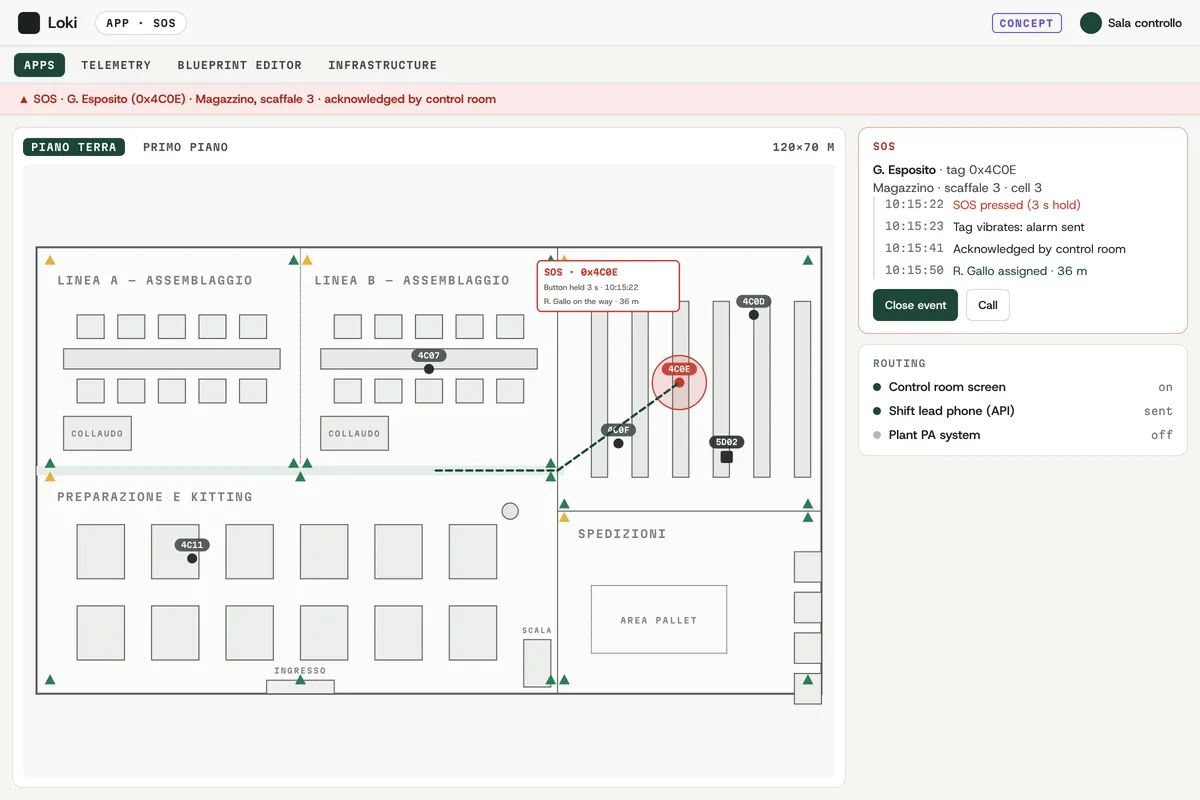
Press and hold. The control room sees who and where.
A button on the tag. The alarm arrives on the screen and, through the API, wherever you route it; the tag confirms with a vibration.
All sectors
 CONCEPT
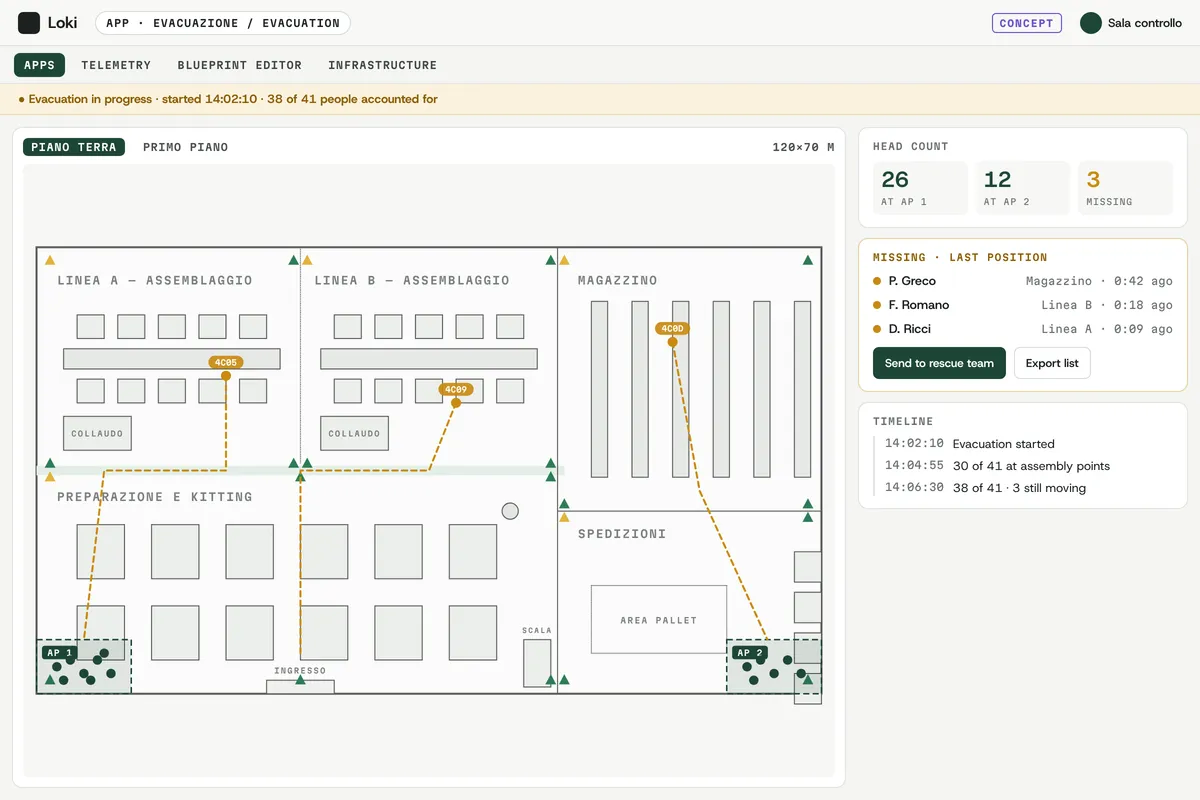
Who is at the assembly point, who is not.
At the alarm, Loki counts the people at each assembly point and lists who is missing, with their last position, for the emergency plan.
All sectors
 CONCEPT
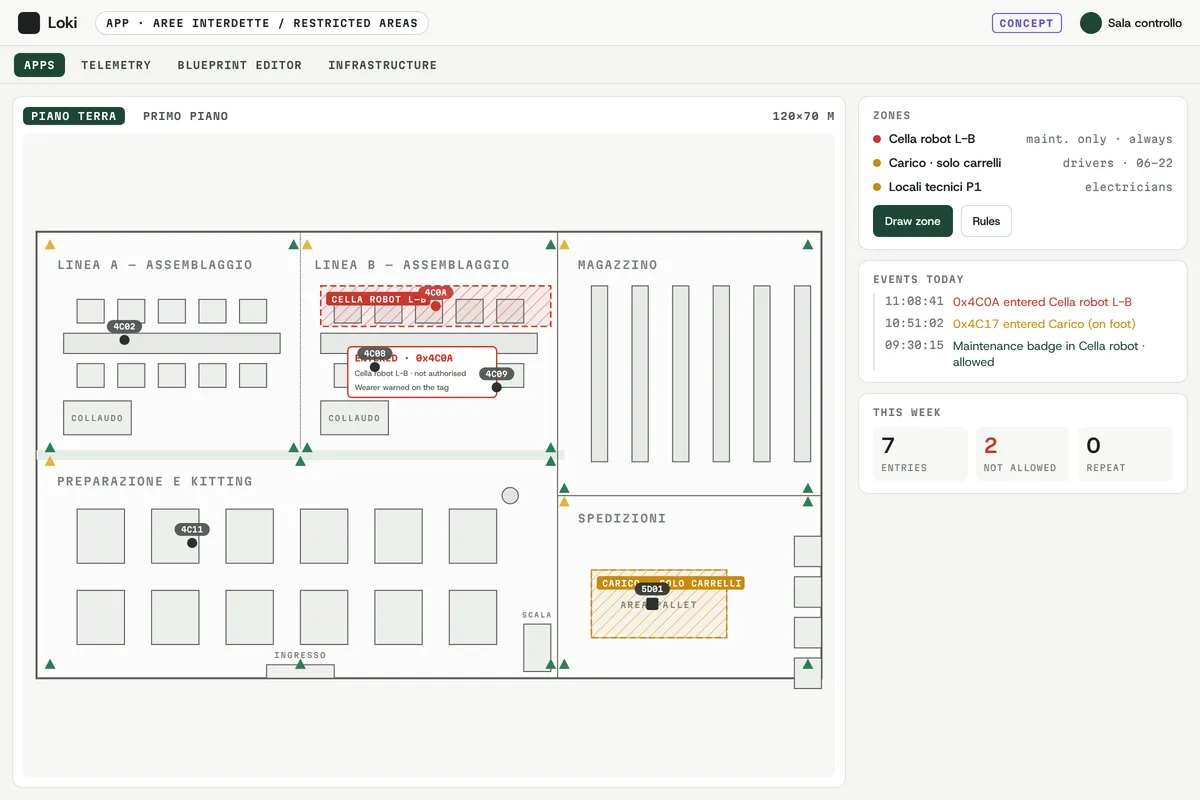
A zone you draw, a rule that holds.
Draw a zone on the plan and say who may enter, and when. Entering it notifies the control room and the wearer; the event is logged.
Manufacturing · Logistics and warehouses · Chemicals and energy
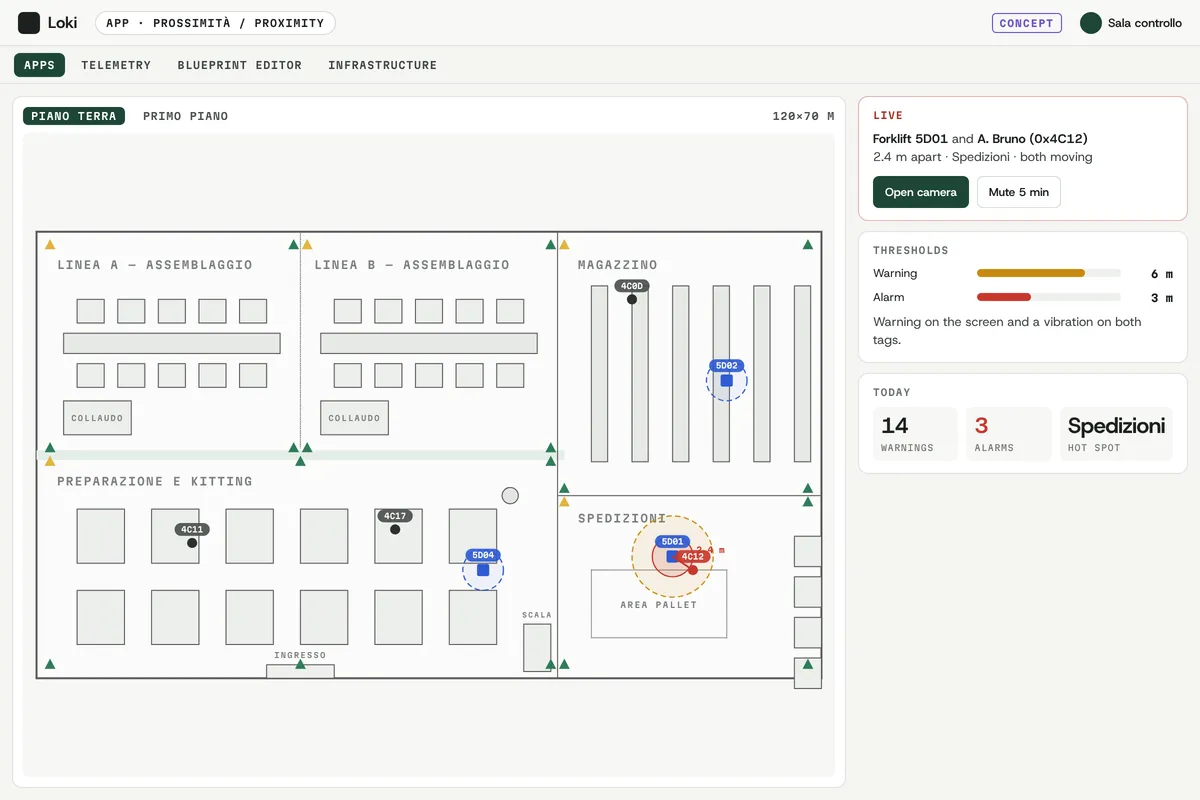 CONCEPT
People and vehicles too close.
A warning when a person and a forklift come closer than the distance you set, on the screen and on the tag.
Manufacturing · Logistics and warehouses
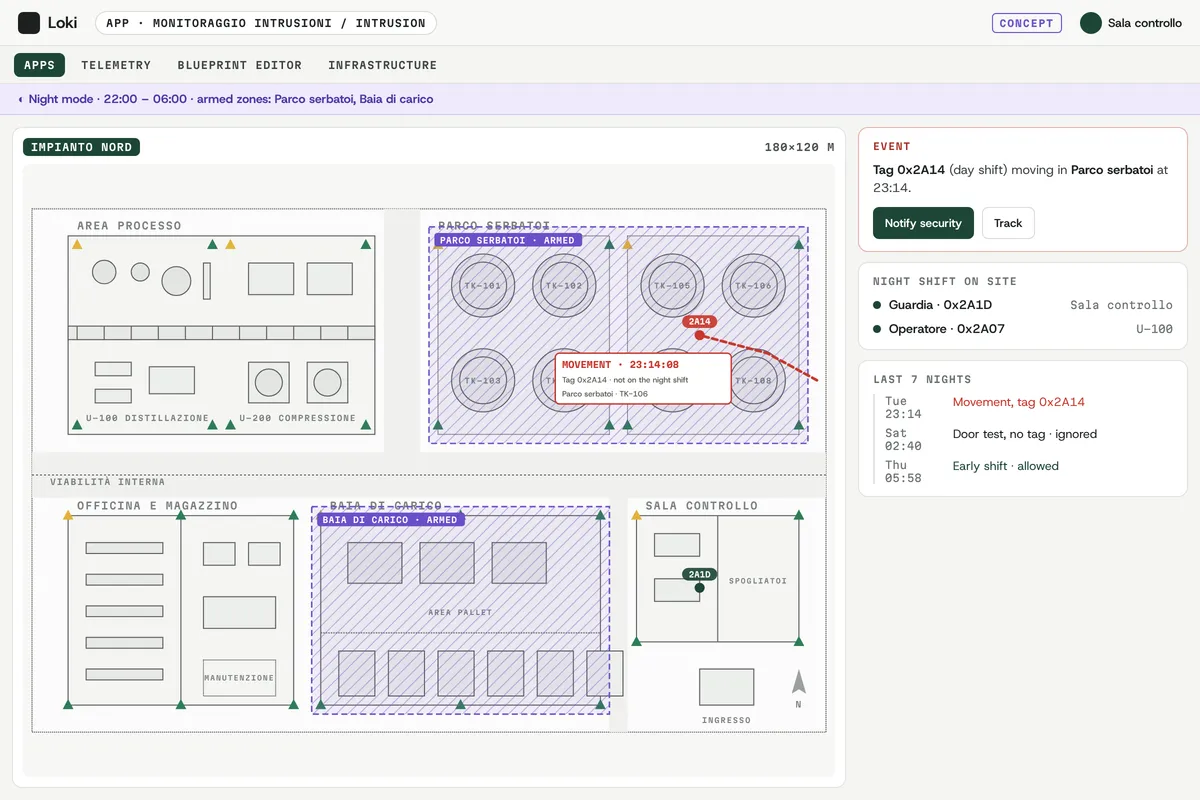 CONCEPT
Movement where there should be none.
Outside working hours, or in a closed area, any movement raises an event: a tag that should not be there and, with the radar function, movement that carries no tag.
Chemicals and energy · Logistics and warehouses · Offices and buildings
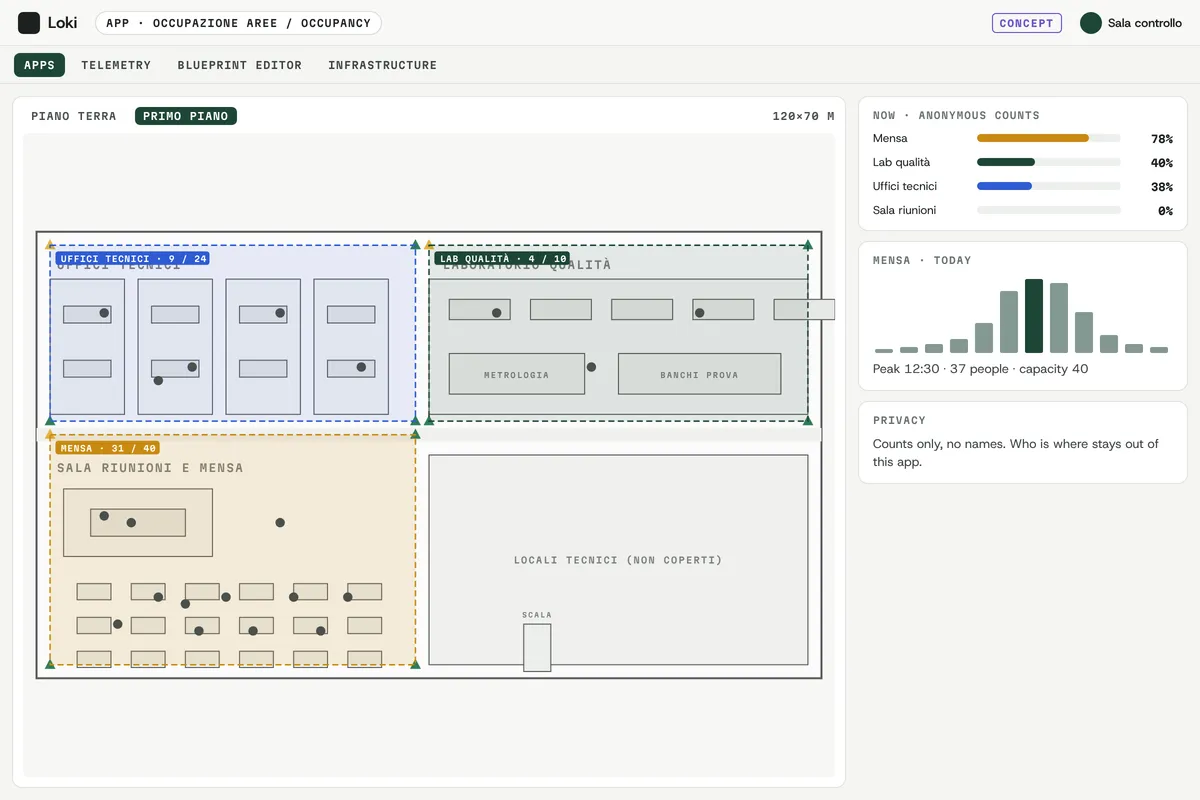 CONCEPT
How many people in each area, now and over the day.
Anonymous counts per area against its capacity: canteen, meeting rooms, labs, wards. Counts only; no names.
Offices and buildings · Healthcare · Manufacturing
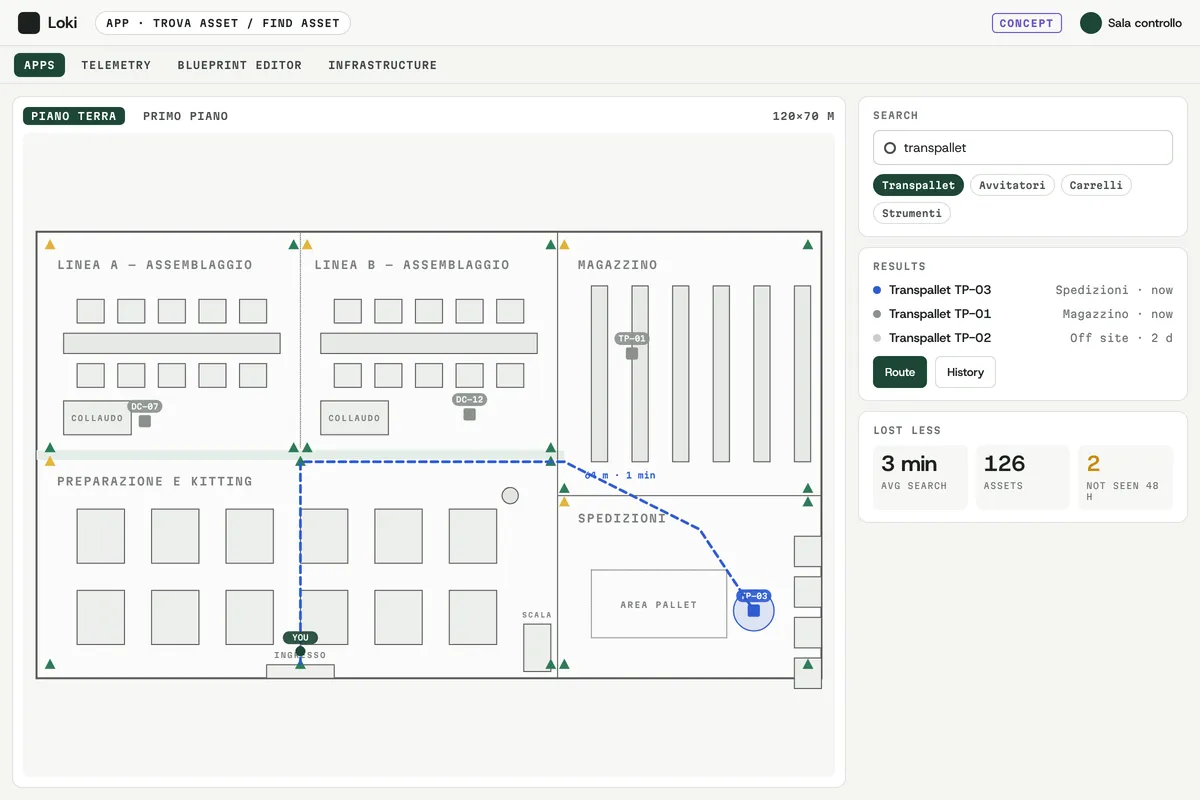 CONCEPT
Type the name. Walk straight to it.
Search a pallet truck, a wheelchair or an instrument by name or type, see where it is and the route to it, and which assets have not been seen for days.
Healthcare · Logistics and warehouses · Manufacturing · Offices and buildings
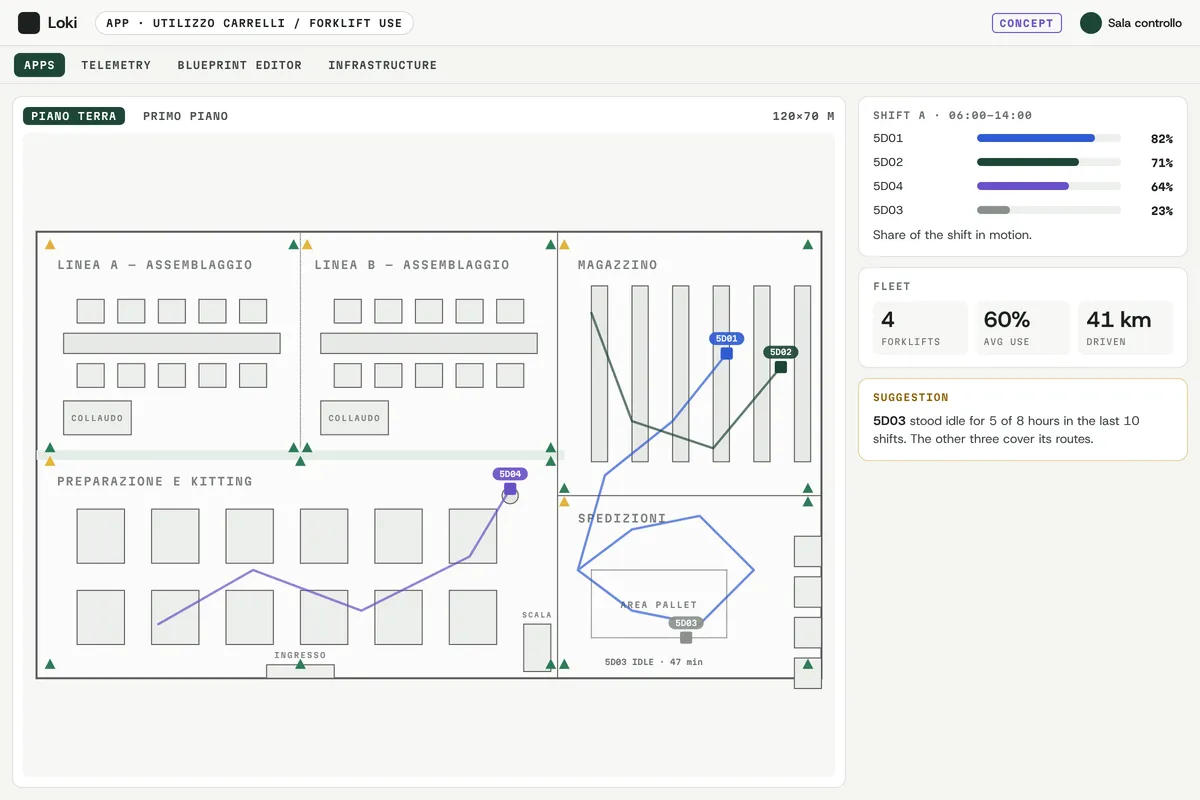 CONCEPT
Which vehicles work, which stand still.
Time in motion, distance and routes of every forklift and AGV, shift by shift, to size the fleet on data.
Logistics and warehouses · Manufacturing
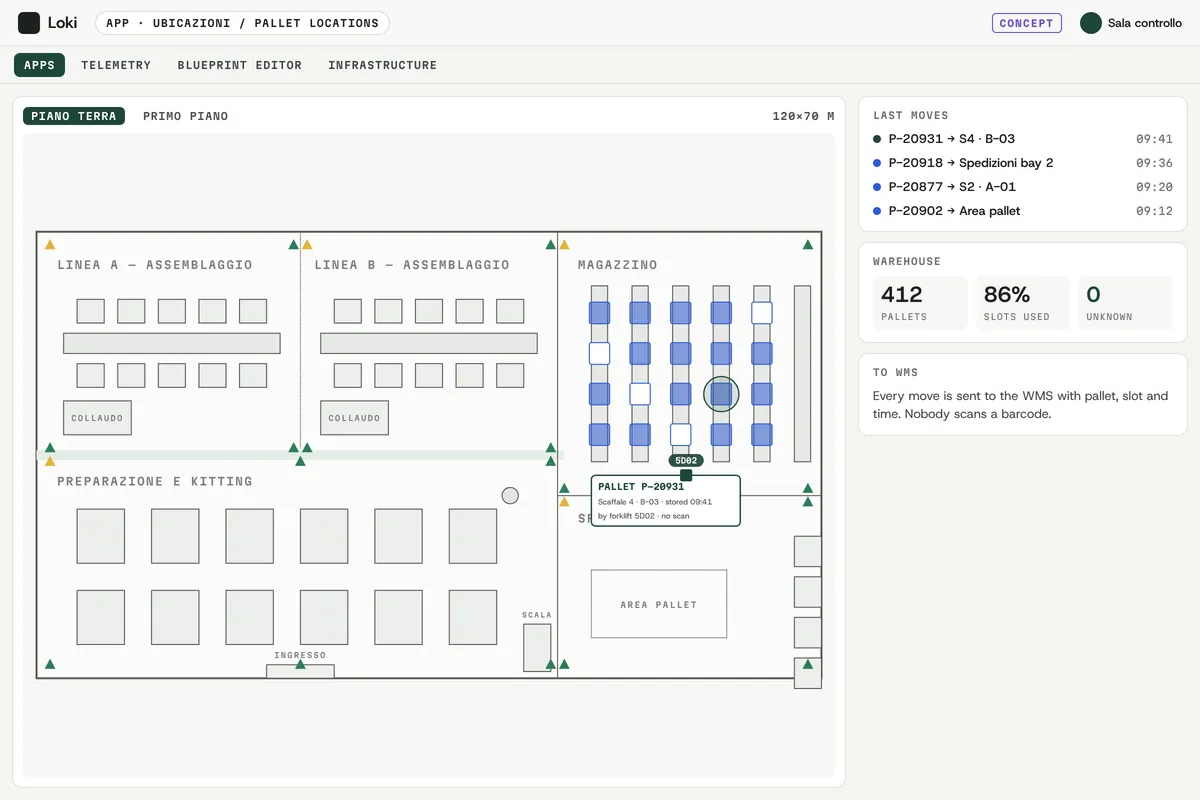 CONCEPT
Every pallet in its slot, without a scan.
The forklift sets the pallet down; Loki records the slot and sends it to the WMS. The warehouse map stays true without barcodes.
Logistics and warehouses
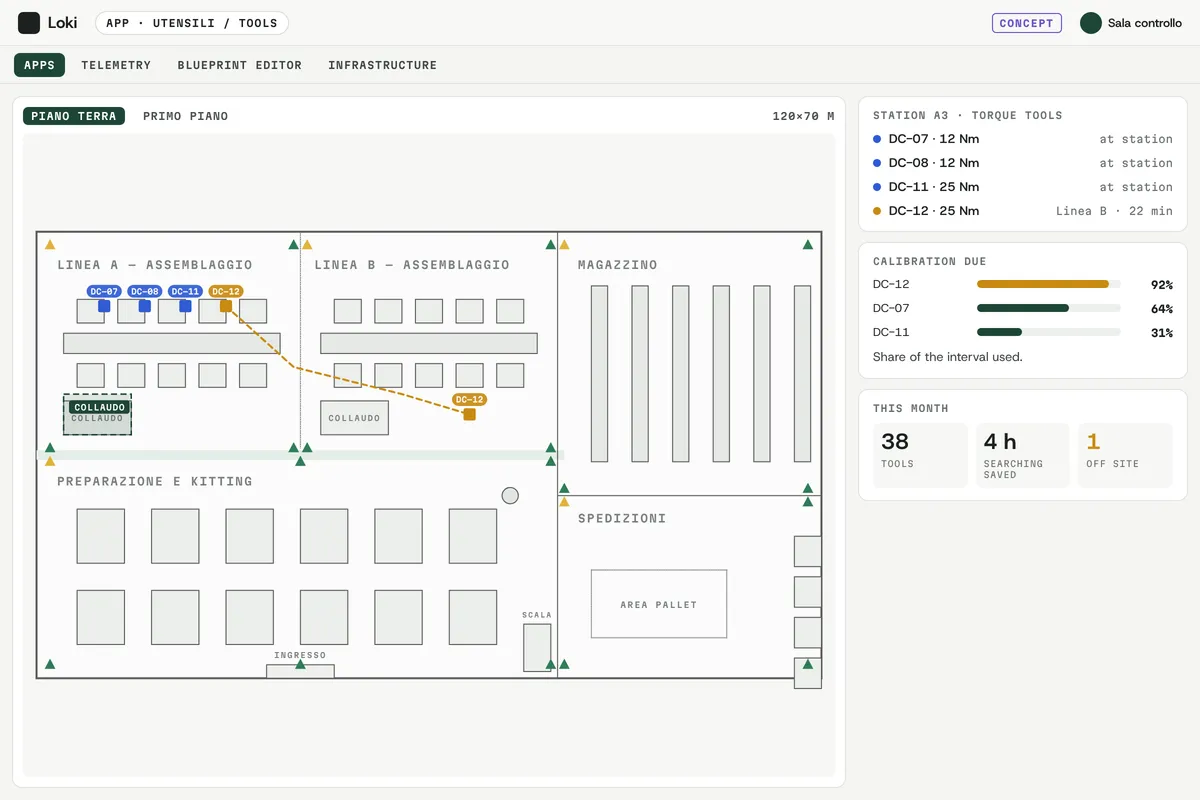 CONCEPT
The right tool at the right station.
Torque tools, gauges and instruments: where they are, which station has them, and when calibration is due.
Manufacturing · Chemicals and energy
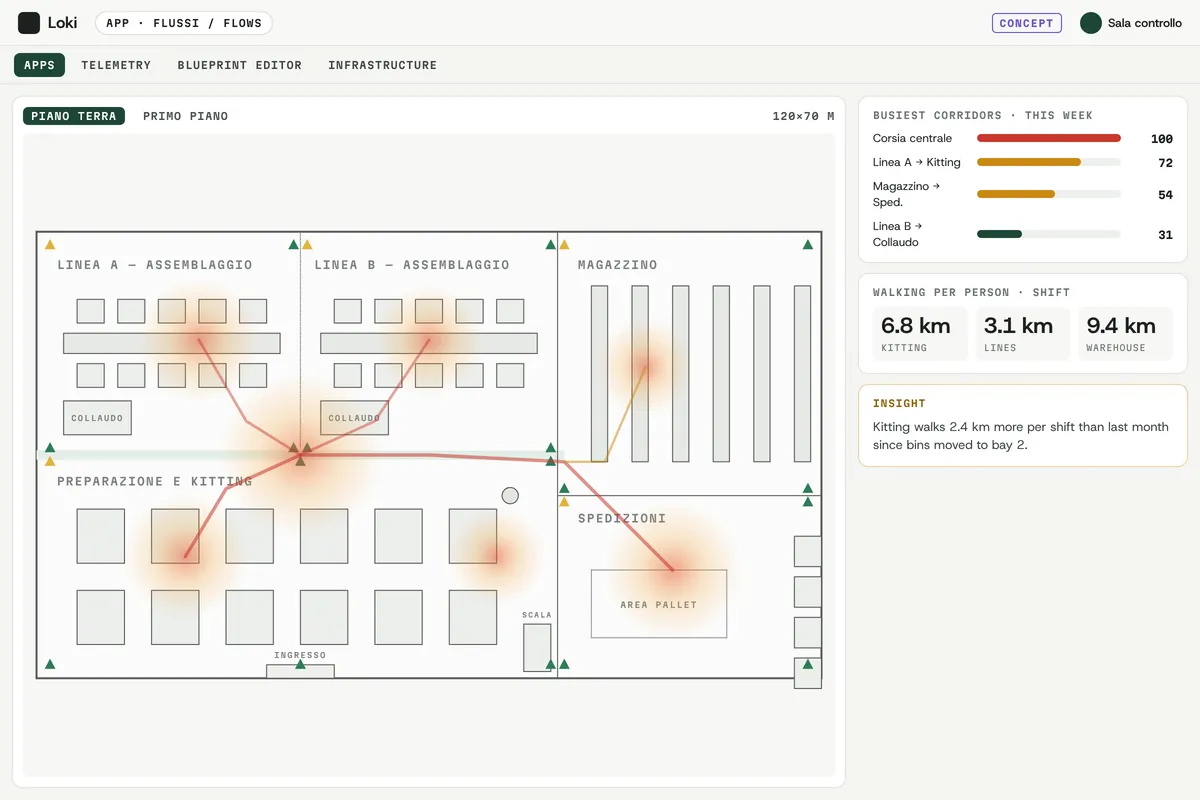 CONCEPT
Where people and vehicles really go.
Heat maps, busiest corridors and distance walked per role, week on week, to redesign a layout on measured routes.
Manufacturing · Logistics and warehouses · Healthcare
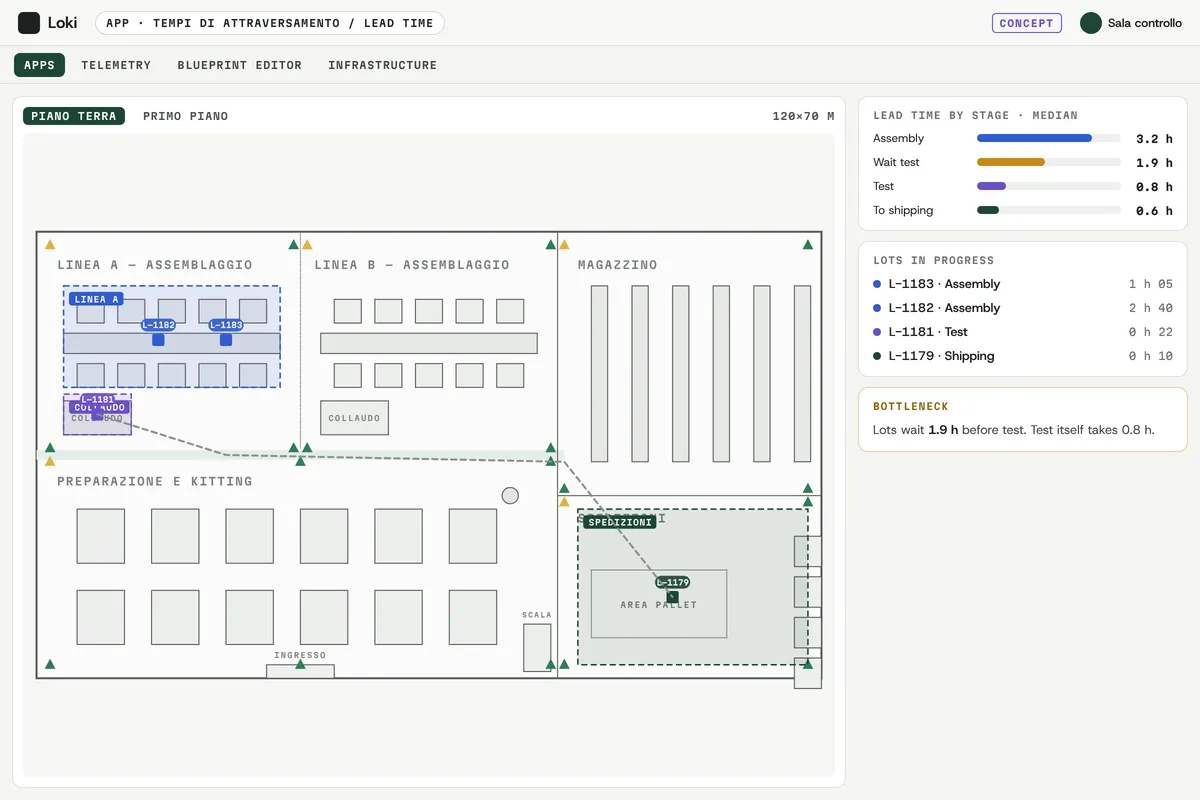 CONCEPT
How long each lot waits, and where.
A tag on the lot or the trolley measures time per stage, from line to test to shipping, and shows where work in progress queues.
Manufacturing
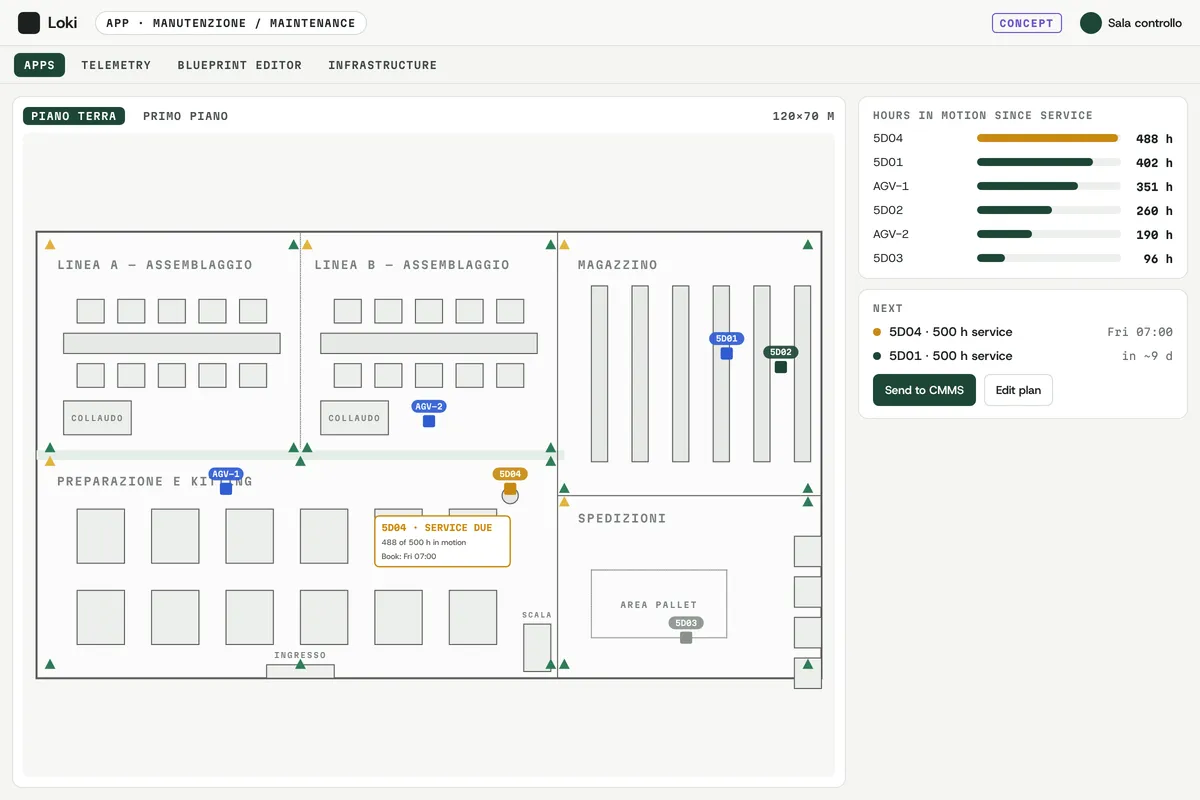 CONCEPT
Service by hours of real use.
Hours in motion for each vehicle and mobile machine, a service plan on real use, and the work order sent to your CMMS.
Manufacturing · Logistics and warehouses · Chemicals and energy
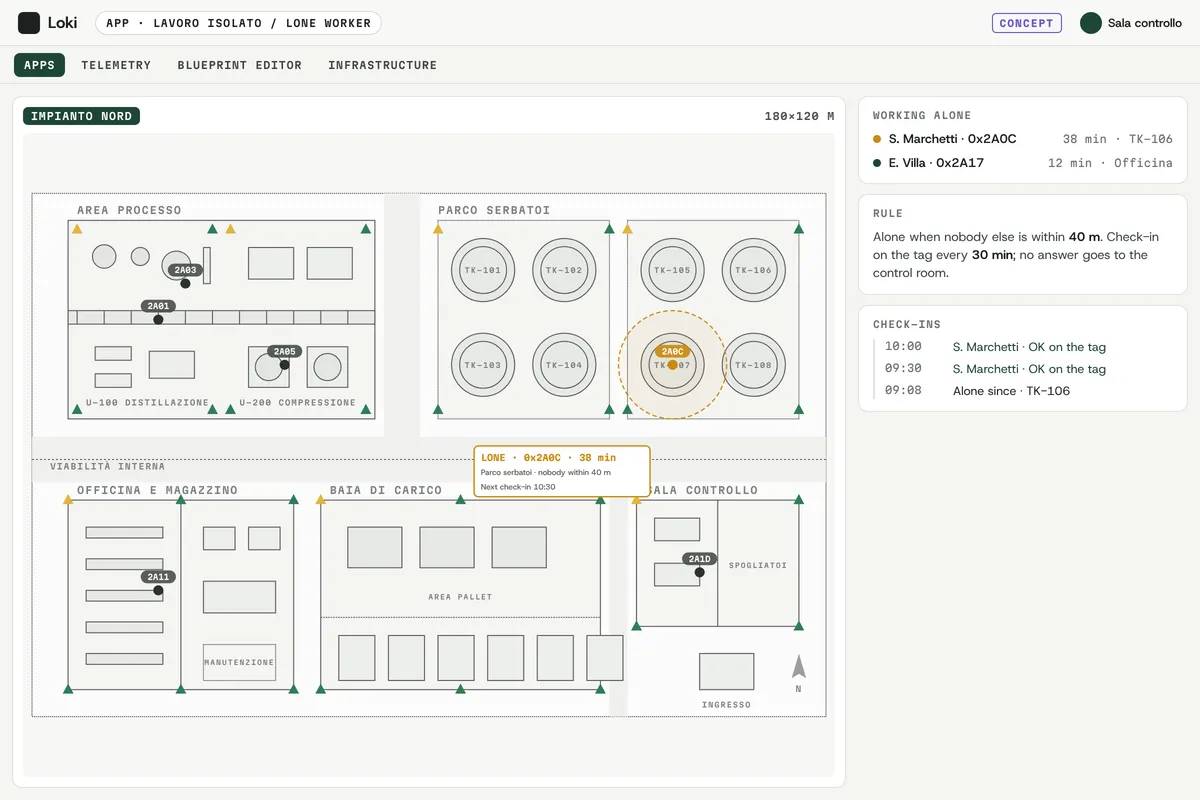 CONCEPT
Nobody alone without a check-in.
Loki knows when a person has nobody within the distance you set, asks for a check-in on the tag at your interval and tells the control room when it does not come.
Chemicals and energy · Manufacturing
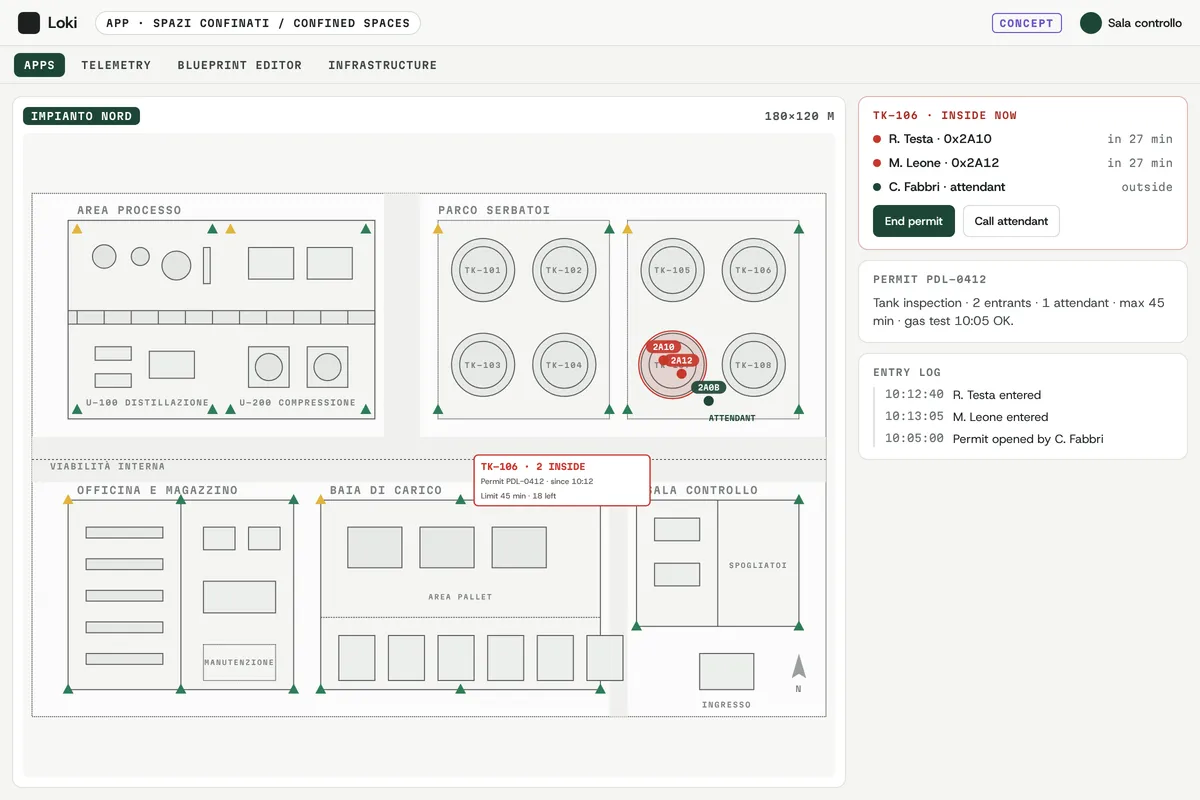 CONCEPT
Who is inside, since when, with which permit.
Entries and exits of tanks, pits and vessels tied to the work permit: people inside, time against the limit, the attendant outside.
Chemicals and energy · Manufacturing
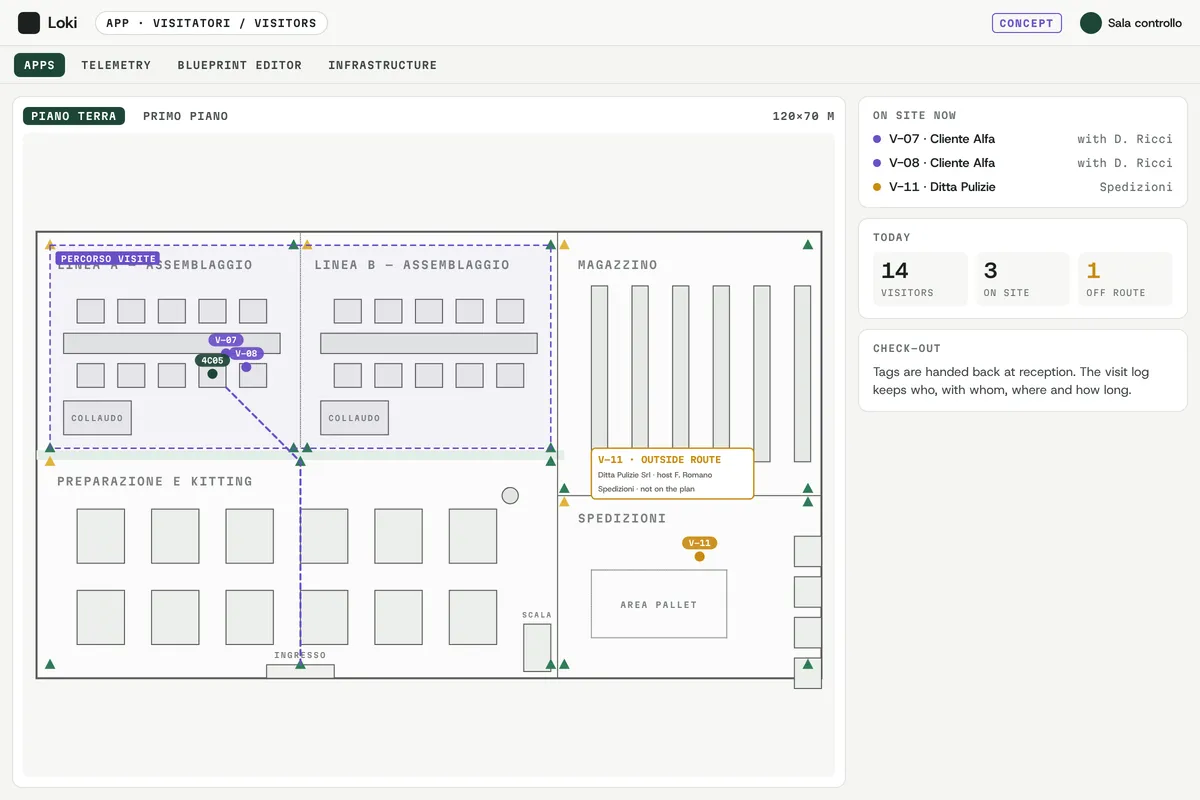 CONCEPT
Guests and contractors on their route.
A tag at reception, the route allowed and the host. Leaving the route is flagged; the visit log keeps who, where and how long.
Manufacturing · Chemicals and energy · Offices and buildings · Healthcare
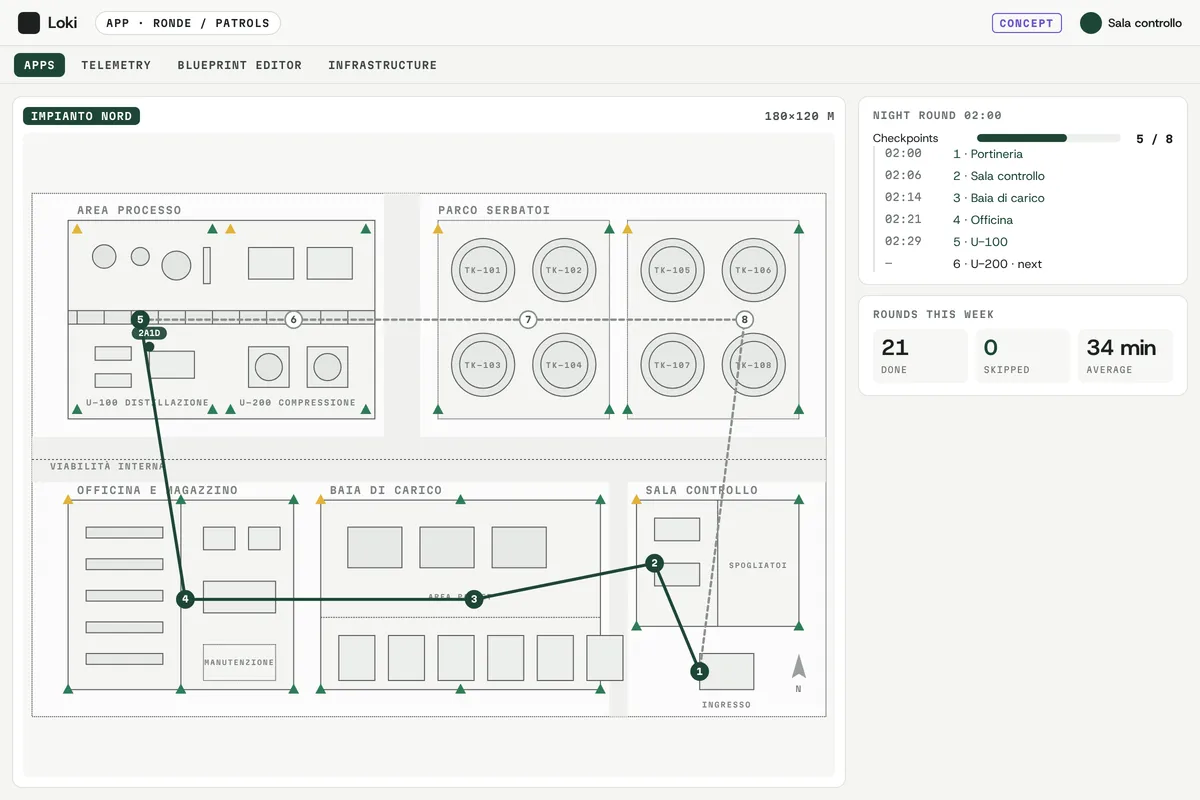 CONCEPT
Rounds proved by position, not by stickers.
Checkpoints drawn on the plan; the round ticks itself off as the guard walks it, with times and the points still to do.
Chemicals and energy · Logistics and warehouses · Offices and buildings
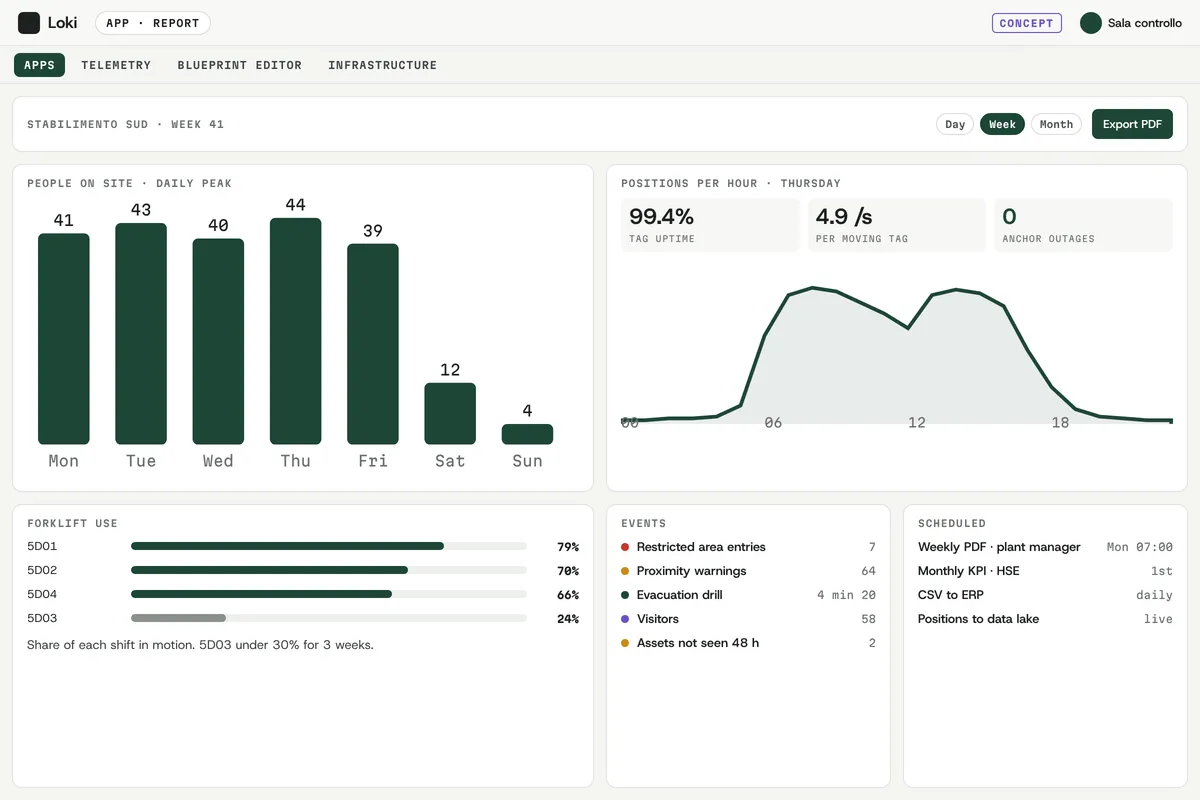 CONCEPT
The week of the plant on one page.
Presence, use of vehicles, events and system health in scheduled reports, as PDF for people and CSV for your ERP.
All sectors
No app matches these filters.
SCREEN: a real Loki Manager screen, demonstration site with simulated tag data. CONCEPT: an illustration of an app in development; names, places and figures are invented.
How an app works
A cell of anchors and the tags. Installed once; more cells and more tags as you grow.
A package switched on in Loki Manager, with its settings: zones, assembly points, who receives which alarm.
The event arrives on the screen, on the tag, and in your systems through the API.
End to end
The same team designs the boards, writes the firmware, runs the engine and builds the app. An app that is not on this list is designed with you on the same infrastructure, from the hardware if it needs it, to the screen your people use. One supplier, one responsibility.
Four anchors and your tags, and every app above runs on them.